
It’s a troubled world where a new order is set to rule. Humanity has a new language, where peace and happiness find a new definition. This summer is not a usual one; it is a witness to both agony and a simultaneous war cry. But this summer brings the FIFA World Cup — undoubtedly one of the greatest shows on Earth, if not the greatest — a real game changer in the context of our times. Debamoy Ghosh, senior journalist and writer has his insights.
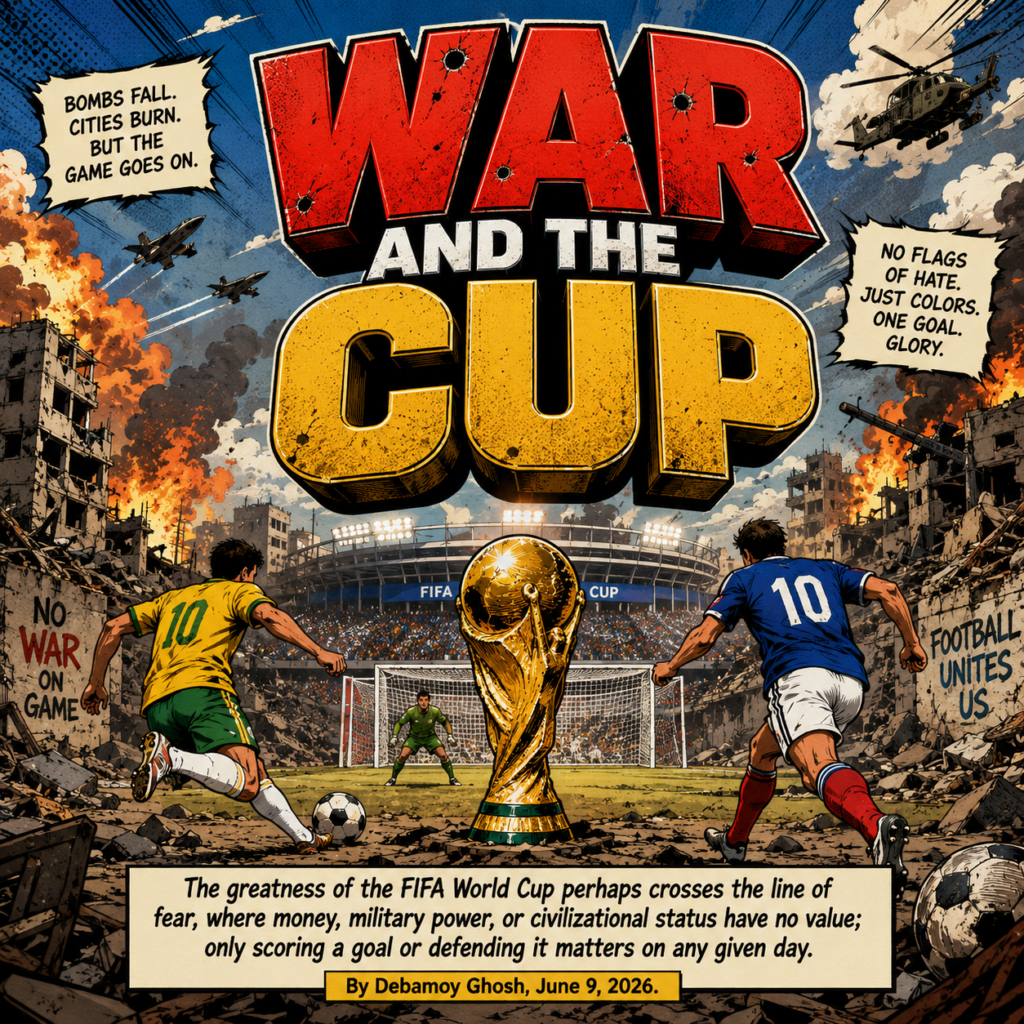
The greatness of the FIFA World Cup perhaps crosses the line of fear, where money, military power, or civilizational status have no value; only scoring a goal or defending it matters on any given day. Where Trump’s mighty America is clearly not a favorite, his critic Lula da Silva’s Brazil or Emmanuel Macron’s France (remember when Trump mocked him?) are going to fight for their sixth and third titles respectively.
Welcome to the summer of the FIFA World Cup 2026 — the entire tournament will generate an estimated $80.1 billion for the global economy. The race for the cup will finally kick off on June 11 at Azteca Stadium in Mexico. The tournament will unfold across 39 days, 16 cities in the U.S., Canada, and Mexico, and up to 6,000 miles of travel.
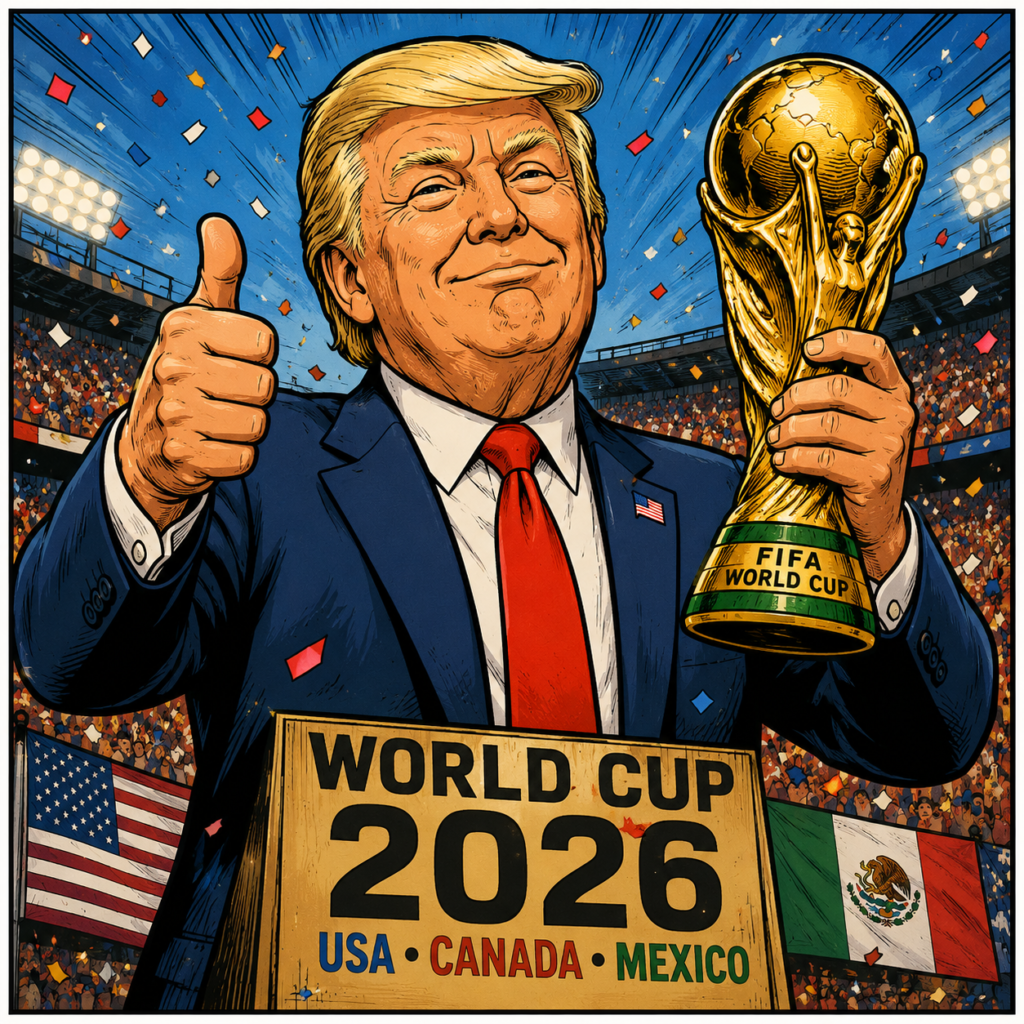
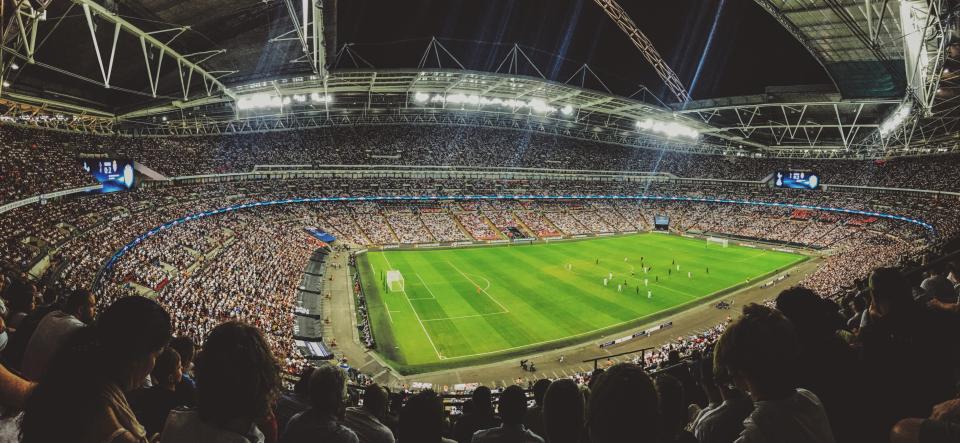
Representative Image – made with AI
Three months ago, Trump’s U.S. killed Iran’s head of state, Ayatollah Ali Khamenei. Iran’s team is competing in Group G, set to lock horns with Belgium, Egypt, and New Zealand — and who knows, they may even face the U.S. at some juncture of the tournament if fate moves in that direction.
When there is conflict, the FIFA World Cup and geopolitics always collide in the news. Can you recall the last time a host country was at war with one of the participating nations? It never happened.
For decades, the FIFA World Cup has served as a potent geopolitical stage, offering authoritarian leaders a global platform to project power and prestige. From Benito Mussolini leveraging Italy’s 1934 triumph, to Jorge Rafael Videla’s military junta exploiting Argentina’s victory in 1978, and Vladimir Putin’s soft-power push in 2018, autocrats have long sought the legitimacy of the tournament’s spotlight. In 2026, the spectacle takes on a different political dimension as the World Cup unfolds under the watchful gaze of a returning Donald Trump.

Leave a Reply